
St Maarten’s National Dress: Color, Fashion & Identity
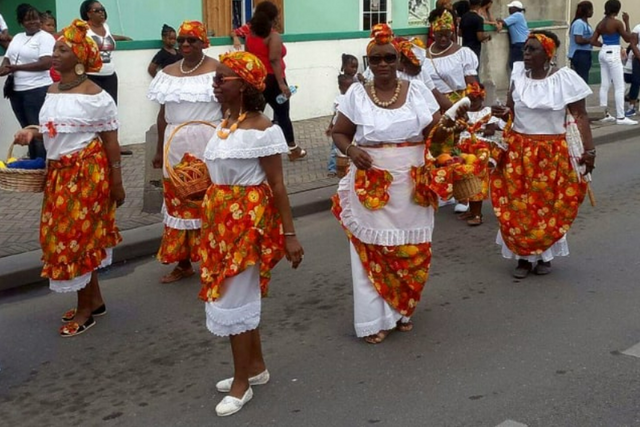
A Celebration Woven in Cloth
The St Maarten national dress is more than fabric and fashion—it’s a celebration of identity, pride, and a vibrant history stitched together from diverse Caribbean roots. Worn with grace during national holidays, school events, cultural parades, and heritage festivals, it captures the essence of an island that’s colorful in both spirit and story.
Though not worn in daily life anymore, the national dress stands as a visual reminder of how style, culture, and memory come together in the Caribbean. For locals, it speaks of home. For visitors, it’s a glimpse into the heart of a people deeply connected to their past.
What Does the National Dress of St Maarten Look Like?
The female version of the national dress is a standout in plaid—a nod to Madras fabric traditions with French Creole roots. It typically features a long pleated skirt, a ruffled blouse, a scarf worn over the shoulders, and a head tie known as a tête or coiffe, styled in symbolic folds.
The male version is simpler but equally meaningful: a shirt made of similar plaid or cotton, paired with dark trousers, often accompanied by a straw hat. Together, they reflect working-class dignity with formal charm—echoes of days when Sunday best meant your cleanest, proudest garments.
Colors often vary but typically include rich reds, vibrant yellows, and bold blues—tones that speak of both island landscapes and African heritage.
Cultural Roots and Caribbean Connection
The origins of St Maarten’s national dress are deeply intertwined with Caribbean history. Plaid fabrics like Madras were introduced during colonial trade but became reclaimed symbols of Afro-Caribbean identity across many islands.
Women would wear these garments to markets, church, and social gatherings—dressed with pride, dignity, and personality. Over time, these practical garments evolved into cultural icons—celebrated today as living heritage.
In St Maarten, this style connects the island to larger Creole traditions while maintaining a distinctly local flavor. It’s often paired with jewelry, head wraps, and storytelling—each ensemble as unique as the person wearing it.
When and Where You’ll See It
You’ll most often spot the St Maarten national dress during:
- St Maarten Day (November 11th): a key celebration of island unity and cultural pride
- Carnival events and parades: where traditional dress shares space with feathers and modern flair
- Cultural nights and heritage showcases: often in schools or community centers
- Photo exhibitions and art shows: featuring stylized or modern interpretations
Many local schools and dance troupes incorporate the dress into performances—passing tradition from one generation to the next.
Why It Still Matters
Even in a modern world of denim and beachwear, the St Maarten national dress holds relevance. It reminds the community of its resilience, style, and the artistry woven into everyday life. Wearing it is a statement: “This is who we are, and we carry our story proudly.”
For visitors, it’s an invitation to look beyond the beaches—to witness how color, texture, and history live on through fashion.
A Living Symbol of Island Identity
Whether displayed in a parade or folded neatly in a family home, the St Maarten national dress carries meaning far beyond style. It’s the fabric of memory, sewn with pride and worn with joy.
Read: Celebrate St Maarten Day: A Colorful Island Holiday with Deep Roots

All Categories
- Adventure
- Betify Casino
- Bus Tours
- casino
- Casino Snatch
- City Tours
- Coralita Beach
- Daytona Spin Casino
- Fatpirate Casino
- Fortunica Casino
- Giochi
- Jackbit Casino
- Lolajack Casino
- Lucki Casino
- Lucky8
- Mystake Casino
- News
- Patrick Spins Casino
- Patrickspins
- Realz
- Spinboss
- Spincastles Casino
- Spins
- Tours Guide
- True Fortune Casino
- Uncategorized
- Vegas Hero
- Very Well Casino
- Verywell Casino Uk
- Westace Casino
- Wild Tokyo
- Winnita
- Winnita Casino