The Heart of St Maarten: Culture, Flavor, and the Island Way of Life
A Gentle Walk Through St Maarten’s Soul & Culture
For all its beautiful beaches and awesome shopping, the real richness of St Maarten isn’t found on a map. It’s found in the laughter of people playing dominoes beneath a tamarind tree, in the scent of salt-fish cooking on a backyard stove, in the rhythm of music echoing through a carnival morning. This is the true essence of the culture on the island.
This island, shared between France and the Netherlands and home to people from over 100 nations, carries a cultural rhythm all its own. Layered, resilient, joyful, and proud.
Food That Tells a Story
Every dish on the island tells a story of where St Maarten has been. The beloved Johnny Cake (a fried disc of golden dough) is more than a snack; it’s a cultural symbol, passed from kitchen to kitchen across generations. Locals eat it with salt-fish, cheese, or simply on its own, fresh from the pan.
Guavaberry liqueur, once made only in home kitchens, is another deep-rooted tradition. Distilled from local guavaberries and Caribbean spices, it’s sipped at Christmas or gifted to guests as a sign of welcome. You’ll find it at bars, in ice cream, and even infused into cakes. Still it remains a humble island classic.
The Game Never Stops
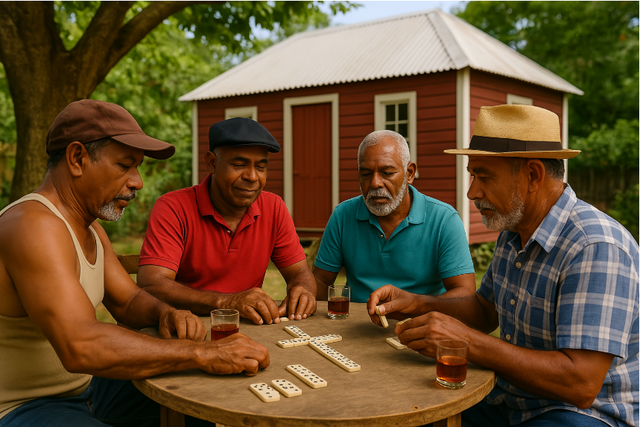
Walk through any local neighborhood on a weekend afternoon and you’ll likely hear the sharp clack of dominoes being slapped onto a wooden table. Dominoes isn’t just a pastime here; it’s a social language. Games are intense but full of jokes, arguments, and familiar jabs between friends who’ve been playing together for years.
Stories Woven into History
St Maarten’s culture is shaped not only by joy, but by struggle, and by those who rose through it. One such figure is One-Tete Lohkay, a woman said to have escaped slavery and returned repeatedly to free others. Her legend lives on as a symbol of resistance and courage, with monuments and stories passed quietly between generations.
Modern icons like Ruby Bute, the celebrated artist and writer, have helped preserve that cultural memory in paint and poetry. Others, like Claude Wathey, shaped the island’s political and social landscape in the years of modernization and growth.
Music, Mas, and the Spirit of Carnival
Nothing captures the island’s spirit more vividly than Carnival. Whether on the Dutch or French side, the season is a burst of color, music, and community pride. Steel pans, soca, and calypso blend into the streets, while dancers in feathers and sequins move with practiced joy through the heat.
Carnival is celebration, but also remembrance. Many troupes and costumes pay homage to island stories, ancestors, and traditions that resist fading into the background.
The Art of Identity
Even the national dress, once worn every day, now mostly seen on holidays and cultural showcases holds meaning. The plaid fabrics, bright colors, and headwraps are woven with pride and worn with purpose. They speak of resilience and rootedness, of Caribbean craftsmanship and cultural survival.
Creole expressions, passed down in a mix of French, Dutch, English, and African rhythms, still season daily conversation. A visitor may not always catch every phrase, but the warmth behind the words is unmistakable.
A Living Tapestry
You don’t need a museum pass to feel the culture of St Maarten. It’s in the woman selling homemade tamarind balls on the roadside. It’s in the man fixing fishing nets beside a faded boat. It’s in the way people greet you with “Good morning,” “Good night” & “Blessings” even if you’re a stranger.
It’s in the quiet tradition of “jollification,” a gathering where neighbors help build a house, repair a roof, or cook for a family in need. There’s no contract, just community. The old ways haven’t disappeared; they’ve simply adjusted to the times.
Where Culture and Tourism Meet
For visitors, experiencing culture here doesn’t mean sitting through a show. It means walking into
Marigot market on Saturday morning, and tasting fresh coconut tart. It means booking a boat tour from a marina that’s been family-run for generations. It means pausing to ask a question, and being met with a story, not a sales pitch.
St Maarten’s culture is not packaged; it’s lived. And that’s what makes it so compelling.
More Than an Island
In a region of islands each with its charm, St Maarten stands out not just for its geography, but for its personality. Its a place where global influences meet local wisdom, and where people from all over the world find common ground under the Caribbean sun.